A Better AAC Block Starts with a Better Development Route
Bring us your plant’s production challenge and the data you already have. Polsapart Technology reviews your materials, process conditions and operating constraints to design a candidate development route around your product objectives.
Together, we define what to measure, how to evaluate the route and what to refine next. Where technically feasible, the route can be assessed on your existing line, with measured results guiding the next step.
Performance Begins with the Cellular Structure
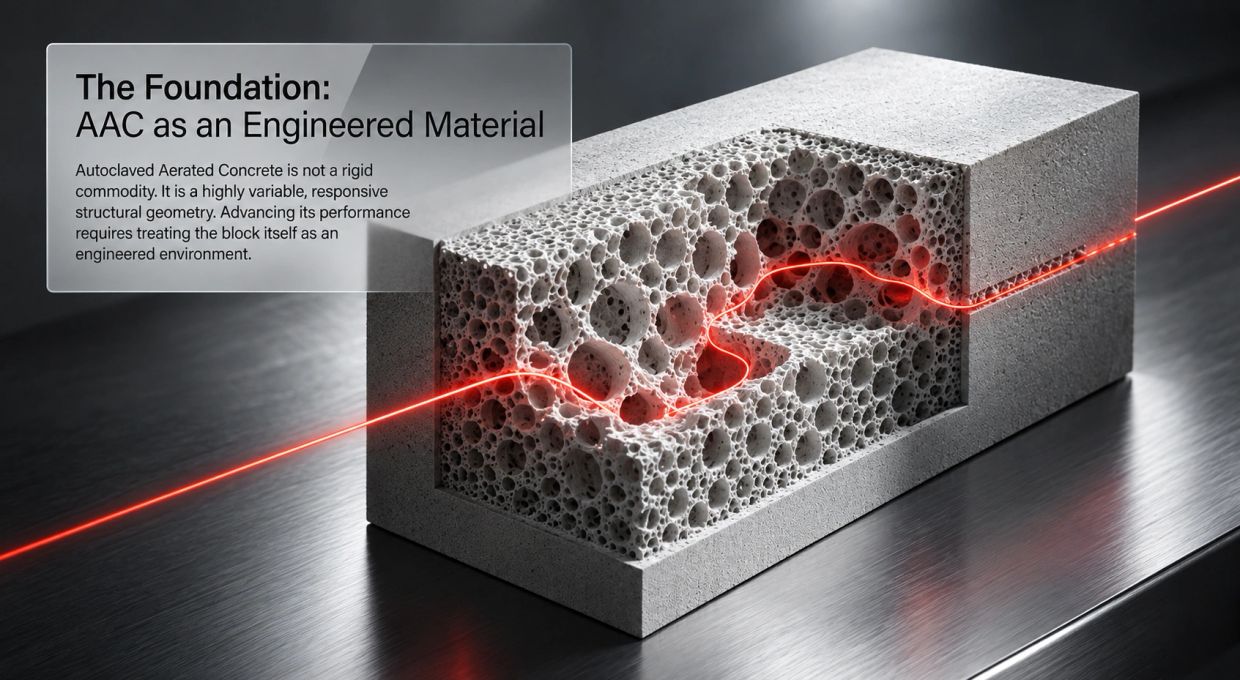
AAC is a mineral material with a deliberately cellular structure. The solid struts and the pores between them give the block its internal architecture. That architecture develops through the production route and is present throughout the finished block.
It matters because a block must meet several requirements at once. Density, strength, thermal and moisture response, cutting quality, dimensions, and handling all relate to the material’s structure and intended use. These properties are best understood together, in the context of the product being made.
Polsapart treats the AAC block as an engineered material. We look at its structure alongside the production conditions and plant evidence that shape it, helping define which product objectives and measurements matter for the next development steps.

From Structure to Product Measurements
A close-up reveals AAC’s cellular architecture, but visible pores alone cannot establish product performance. For development, the structure has to be considered alongside plant and product measurements such as density, moisture condition, strength, dimensions and cutting quality.
Polsapart Technology relates these measurements to the production records and objectives available for that plant. This helps determine which variations merit attention and what evidence should be collected for the next development step.
Production Conditions Set the Real Challenge
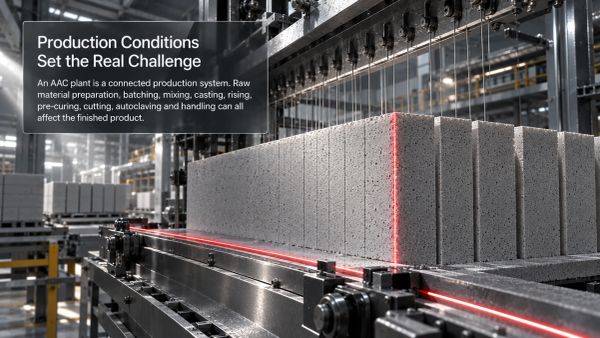
An AAC plant is a connected production system. Raw material preparation, batching, mixing, casting, rising, pre-curing, cutting, autoclaving and handling can all affect the finished product. A visible problem at the end of the line may have started earlier in the process.
Edge damage, dimensional variation, uneven moisture, density variation, cutting rejects and cycle constraints can have different causes. Treating one symptom in isolation may leave the underlying issue unresolved. Polsapart Technology works with the plant to identify the actual priority, connect it to the relevant process stages and define the next engineering question.
The route for investigation is specific to the plant, product, equipment and operating conditions. It is developed from available evidence, then assessed against the objectives agreed for that application.

Useful Engineering Starts with the Data You Have
A useful first review does not require a perfect dataset. It needs the available information organised around a clear product or production objective. Relevant records may include:
• Product requirements: AAC grade, dimensions, any established density or strength targets, and the main production or product priority.
• Materials: raw material types, available composition and moisture information, and formulation or dosage details to the extent they can be shared.
• Process conditions: batching and water addition, mixing, casting, rising, pre-curing, cutting and autoclave-cycle records.
• Product and quality results: density, moisture condition, strength, dimensional checks, visible defects, edge damage and rejected blocks.
• Production context: material-lot changes, variation between production runs, line constraints, yield and relevant energy or steam data.
Not every plant records every item. Polsapart Technology can begin with the information available, identify which gaps matter to the investigation and define what should be measured next. This creates a clearer basis for designing a plant-specific development route and evaluating it against agreed objectives.
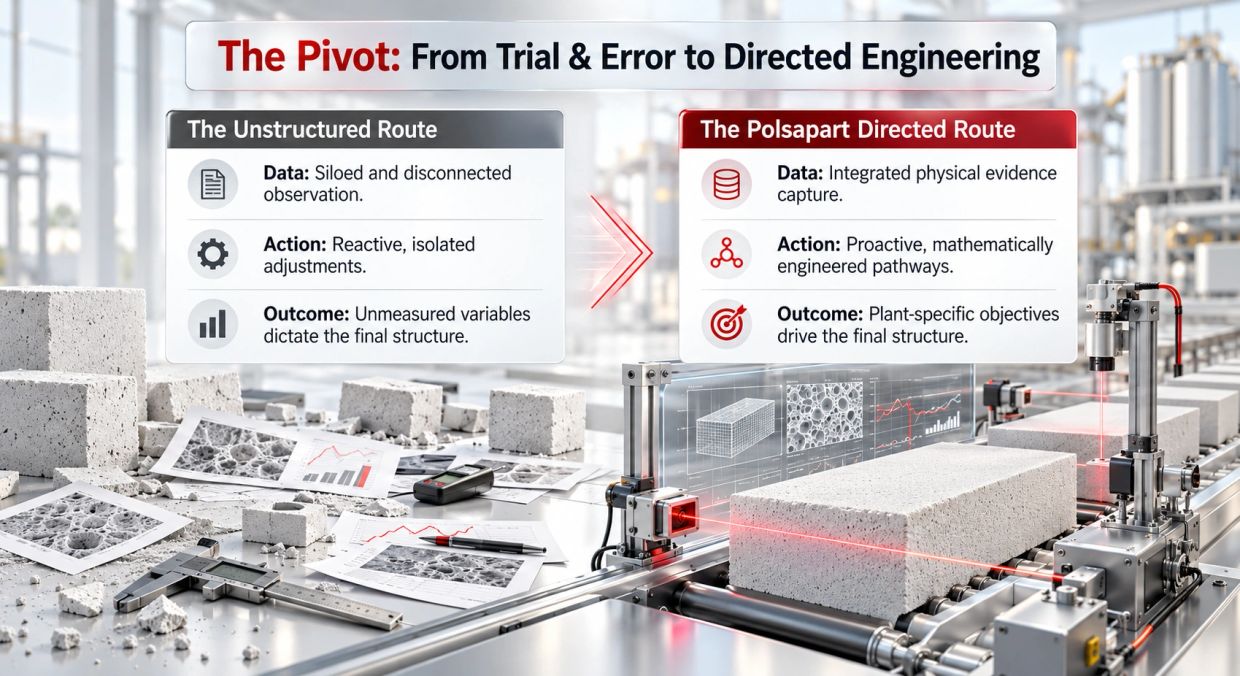
Replace Isolated Adjustments with a Directed Development Route
AAC production involves many connected stages. A change to materials, water addition, mixing or curing conditions can affect several product and process outcomes at once. Without a clear baseline and a defined objective, it can be difficult to understand what caused a result or whether it can be repeated.
Polsapart Technology structures development around the evidence available at each plant. We establish the product objective and operating constraints, map the relevant material and process inputs, and use production and quality data to identify a candidate route for evaluation.
After this review, a controlled trial can be designed where appropriate, with specific measurements agreed in advance. The results guide further adjustments and help determine whether the route should progress to additional validation. Each step is connected to a clear engineering question and to the plant’s priorities.

The Engineering Review: From Data to a Development Brief
The review brings the available plant information together into a practical development brief: the objective, the process variables to examine, the data gaps to address and the measurements needed to assess a candidate route.
This gives the plant team and Polsapart Technology a shared basis for deciding what to examine next. The brief reflects the plant’s current product, materials, line conditions and agreed priorities.
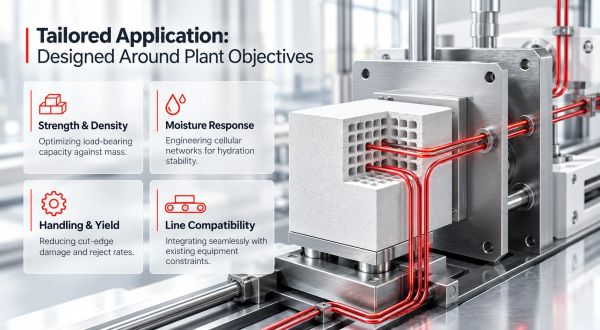
Designed Around Your Plant’s Priorities
Every development project starts with the objectives that matter to the plant. These may include density and strength targets, moisture behaviour, edge integrity, handling, production yield or compatibility with the existing line.
Those priorities help shape the candidate route, the process conditions to examine and the measurements needed to assess progress. The result is a plant-specific development direction, evaluated under relevant operating conditions and against agreed product requirements.
From Candidate Route to Measured Evidence
Once a candidate route has been developed from plant data, a controlled trial can assess it under relevant operating conditions. Before the trial, Polsapart Technology and the plant team define the objective, baseline, process conditions to examine, sampling approach and measurements needed.
During the trial, operating conditions and product results are recorded together, so the outcome can be reviewed in context. The results are compared with the starting baseline and the objectives agreed for that plant. They may support the candidate route, reveal constraints or show where further adjustment is needed.
Each trial informs the next decision: refine the route, gather additional evidence or consider further validation. Progression depends on measured results and the plant’s requirements.
A Plant-Specific Pathway for AAC Development
Every AAC plant has its own materials, equipment, product requirements and operating constraints. Polsapart Technology connects these factors in a clear development pathway: define the priority, review the available data, identify important gaps, develop a candidate route and agree how it should be evaluated.
Where a controlled trial is appropriate, measured feedback guides refinement and informs the next decision. The plant team gains a structured basis for deciding what to investigate, what to measure and what to consider next. Any product or process outcome must be demonstrated under the relevant plant conditions.
To discuss a plant-specific AAC development route, visit our Contact page and tell us about your production challenge and the data you have available.